The bus ride to Tirana was… eventful. First, a triathlon was scheduled in Kotor that effectively shut down the main road into town, so we had no choice but to walk. No bus or taxi in case it started to pour, which it had already done that morning. But, as it turned out, we were able to walk in the middle of the road unbothered by traffic, athletes or rain, with enough time to stop and have a coffee before getting on the bus.
The bus pulled out of the station only a couple minutes late, the only thing that would happen even remotely on time for the entire bus trip. We made our first stop at the next town over from Kotor. A few passengers got on, and then our driver disappeared, returning with a can of coke bout 10 minutes later.
We carried on for about another twenty minutes when our driver randomly pulled over at a local bus stop after receiving a phone call. We sat at that bus stop for another 15-20 minutes when finally a passenger from a different bus got on ours.
On we went, this time for a good stretch until we reached another stop where new passengers got on, and we were able to use the bathroom. Just a quick 10 minute stop according to the bus driver, then he disappeared. He returned 30 minutes later this time with a bottle of water.
Once again we were on our way, and for a good chunk of time until we reached the border where we had to go through passport control. We lined up first to exit Montenegro, then lined up again to enter Albania. About half way through the process of scanning the documents of every passenger on our bus, the computer system glitched and we had to start over. Once that was done, we piled back on the bus only for our driver to disappear again and return about half an hour later. We pulled away from the border crossing, and after about five minutes, our driver received another phone call, stopped the bus and began reversing down the highway, back to the border where we sat for another 10 minutes before three new passengers got on.
We continued down the highway, this time there were no stops or issues, until about roughly 30 minutes from our destination, our driver pulled over and announced a 30 minute break, where he sat and had a coffee and several cigarettes with a friend, while we just stood on the side of the road and wondered if we were ever going to make it.
Finally we were off, the final stretch, nothing could stop us, anything more would be ridiculous. We trundled down the highway toward Tirana with purpose, our driver finally showing some urgency, maneuvering around the traffic with focused professionalism. We rounded the last corner and made our way to the exit only to find that it was blocked with what we thought was a collision, but was actually a police car. There was no signage, nor officer to explain what was happening, and according to google maps, no other quick option.
We sat there on the bus while our driver spoke to others that had gotten out of their cars to see what was going on, all the while other vehicles were slowly trying to make their way to the front of the line, blaring their horns to help the situation. This went on for another 30 or so minutes until someone got fed up and moved the three pylons at the rear of the police car, giving everyone enough room to get through. Our driver saw this, and squeezed the bus through the narrow gap, and up the offramp to a busy roundabout and an angry cop. When confronted by the officer our driver just shrugged his shoulders, said a few words and nosed into the traffic. We could see the bus station but it would still be another 15 minutes before we got off the bus.
In total we were over two hours late, an already long, six hour bus ride came to be well over 8. We thought we would arrive in Tirana with some daylight to spare, but that wasn’t the case. It was dark and we were hungry and cranky. When we finally reached our apartment, we discovered that it was in the same building as a traditional Albanian restaurant. With the decision pretty much made for us we sat down to a delightful meal, and went to bed.
The next morning, we awoke to sunny skies.
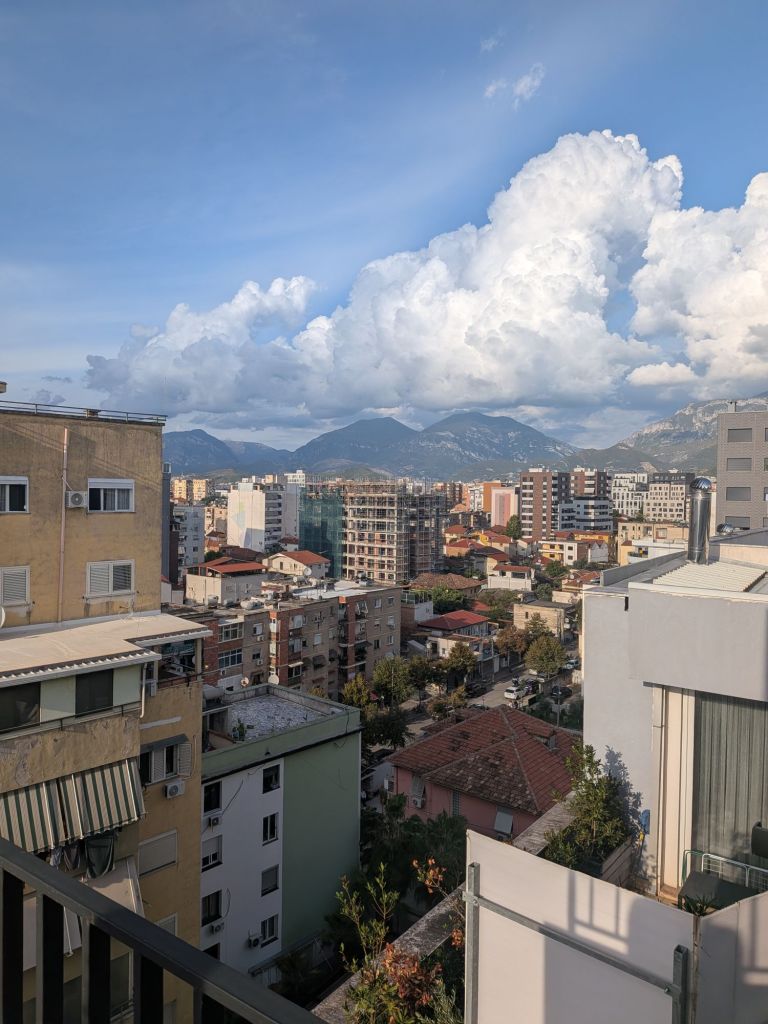
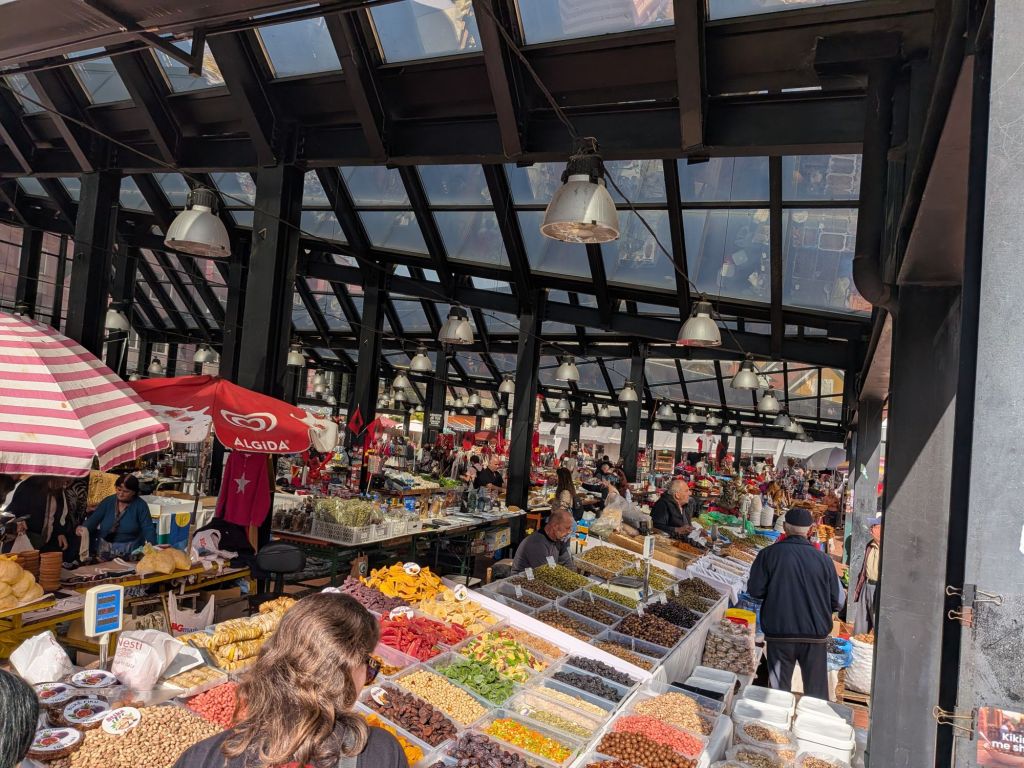
We stepped out of our buildings front door and quickly discovered how close we were to the New Bazaar. Literally 50 paces from the door to the square. It is called the New Bazaar because it was built next to the old one in 1931 under King Zog’s rule (I’ll get to that later), and was modernized in 2018. It is now a glass covered market where vendors sell everything from, nut, spices, and dried fruit, to honey, fresh produce and Albanian flags.
We spent the day wandering the city, and found it to be quite a unique place. There’s a mix of old and new, rigid Communist architecture like the National Historical Building right next to modern and expressive buildings like the Skanderbeg Head Building.
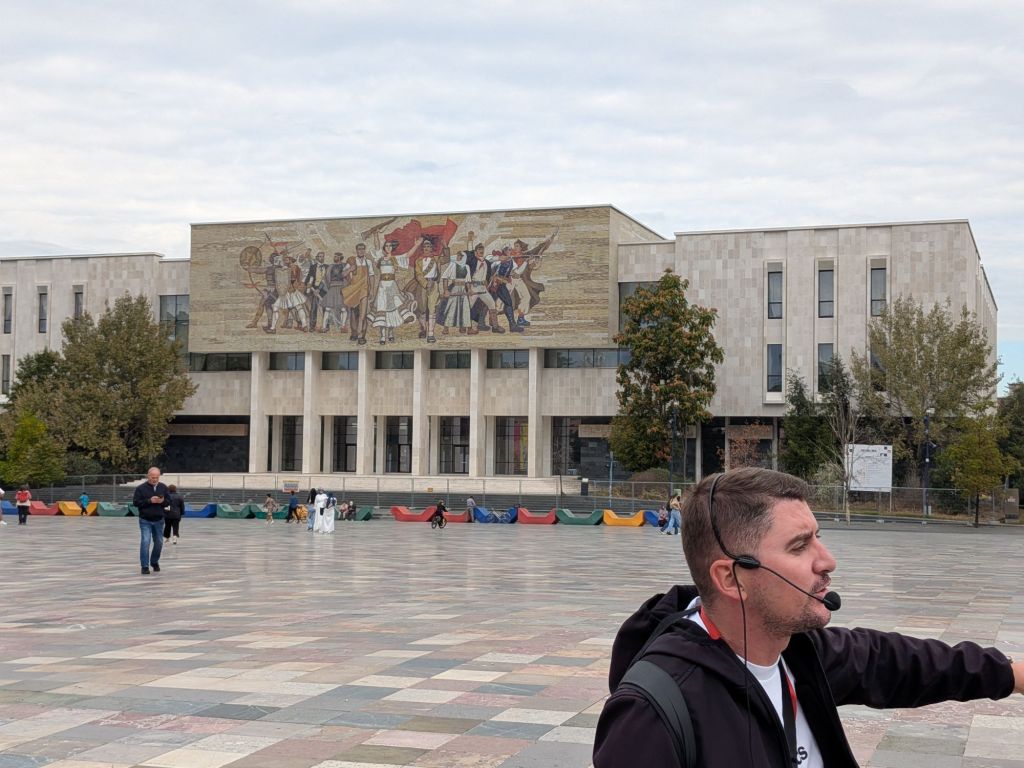
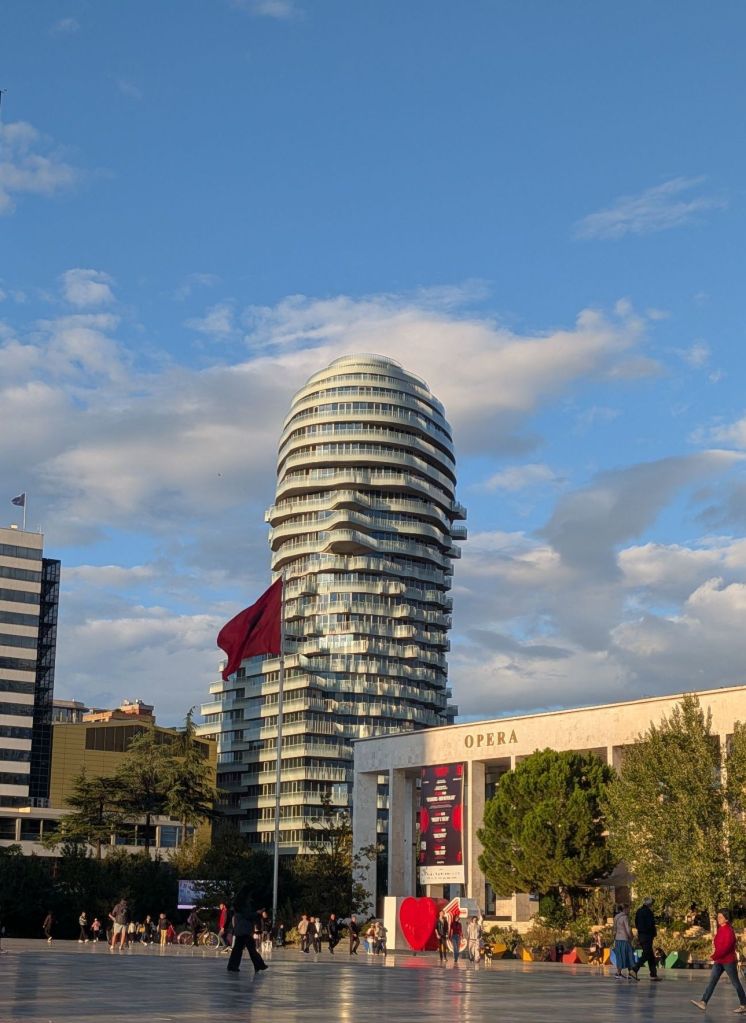
The city had tree lined streets with wide sidewalks and bike lanes. Bars, cafes and bakeries were everywhere. We explored the city for a while, stopped at a cafe or two and even climbed a pyramid.
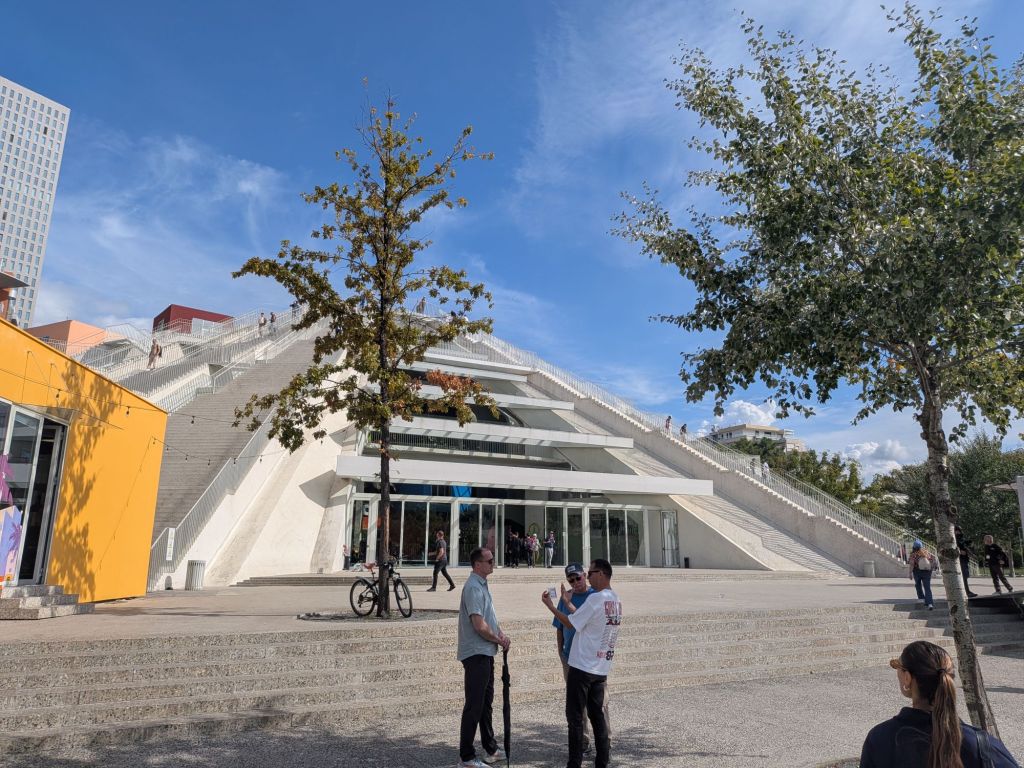
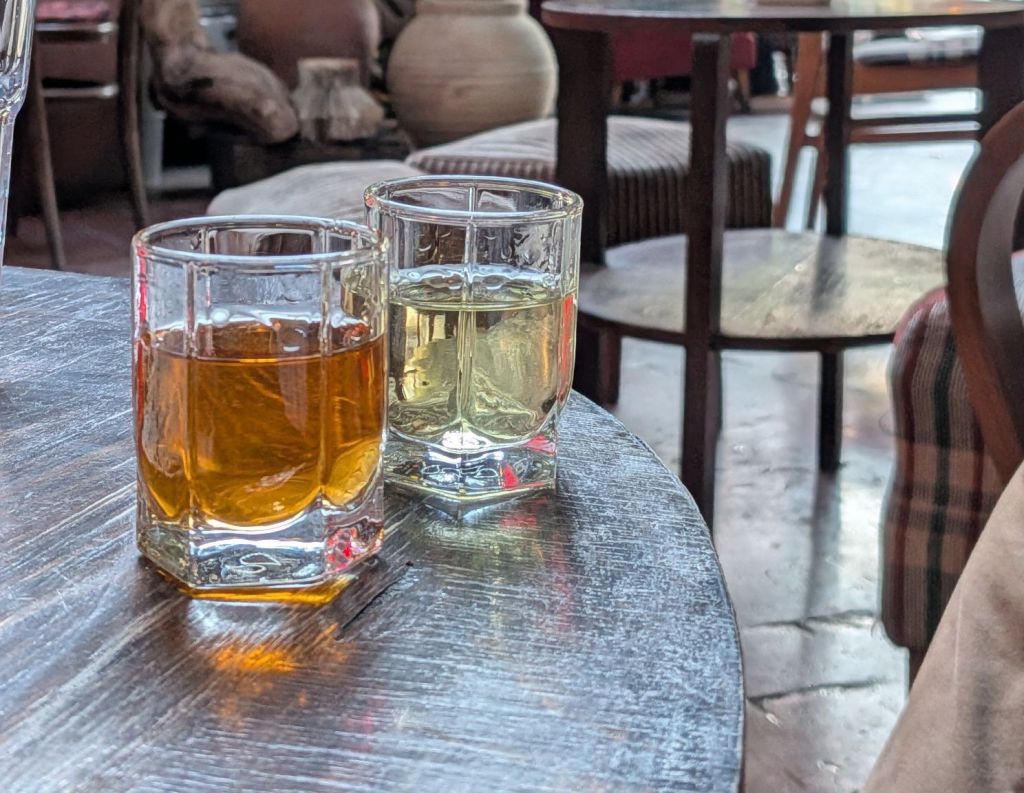
Day one in Tirana was a lot like that. Walking, exploring different neighborhoods, eating, and drinking. One notable stop we made was to Kometeti Bar for some Raki, a clear spirit flavoured with a range of different herbs and aromatics.
The next day, you guessed it, we did a free walking tour, and what we learned about Albania was fascinating. Between self made monarchs, Nazi occupation, and brutal dictators, the people of Albania have been put through a lot.
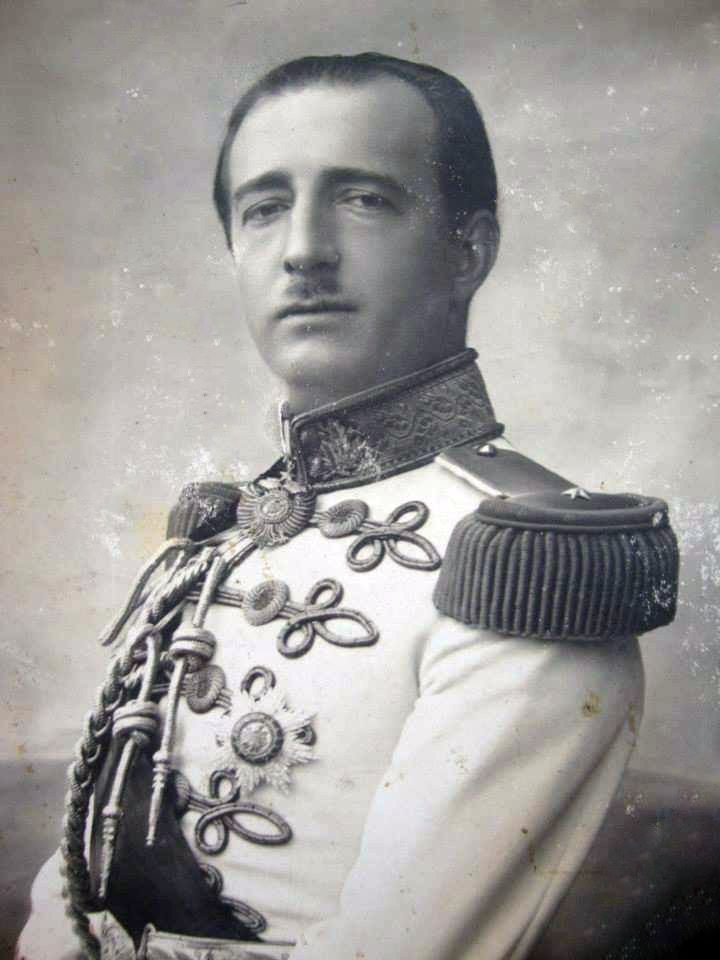
Ahmet Zogu became Albania’s prime minister in 1922 at age 27, but his oppressive rule sparked an uprising that forced him to flee to Belgrade in 1924. There he won backing from Yugoslavia and oil interests, and in December 1924 he returned with an army of mercenaries and overthrew the government. He then rewrote the constitution, became president in 1925, and crushed opposition. In 1928 he proclaimed himself King Zog I, Albania’s first king.
During his reign of roughly ten years, Zog drew Albania closer to Italy, relying on Italian loans to fund infrastructure and his lavish lifestyle. As Italian pressure grew, he resisted Rome’s demands for what amounted to a protectorate, and Italy invaded in April 1939. Zog fled with a large quantity of gold, and Italy installed Victor Emmanuel III as king, ruling Albania through a puppet government.
During WWII, Albania was occupied first by Italy and then by Germany, and the country broke into rival resistance groups that fought the occupiers and each other. When the Germans withdrew in late 1944, Enver Hoxha’s Communists took power, eliminated opponents through sham trials, executions, and imprisonment, and rigged the single-party election of December 1945. That set the stage for roughly 46 years of Communism.
The Communist rule of Albania was “the most Communist” of all the countries, according to our free walking tour guide. The country was completely cut off from the rest of the world with the exception of Yugoslavia, the USSR, and China. But one by one Albania accused each of those countries of being not Communist enough, and eventually cut ties with them as well.
During the nearly fifty years of Hoxha’s dictatorship, every aspect of the citizens of Albania’s lives were controlled. Where they lived, what they ate, what they learned, the media, everything was handled by the government
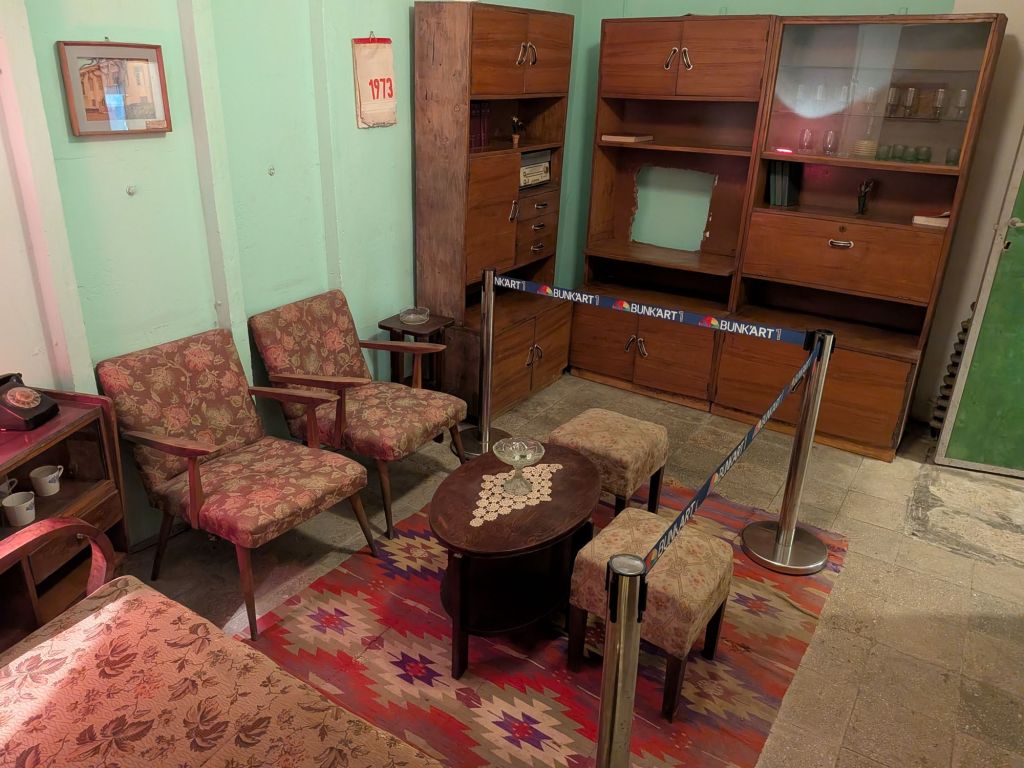
Enver Hoxha’s legacy would be one of paranoia. He built roughly 175,000 concrete bunkers over twenty years, mostly looked like this
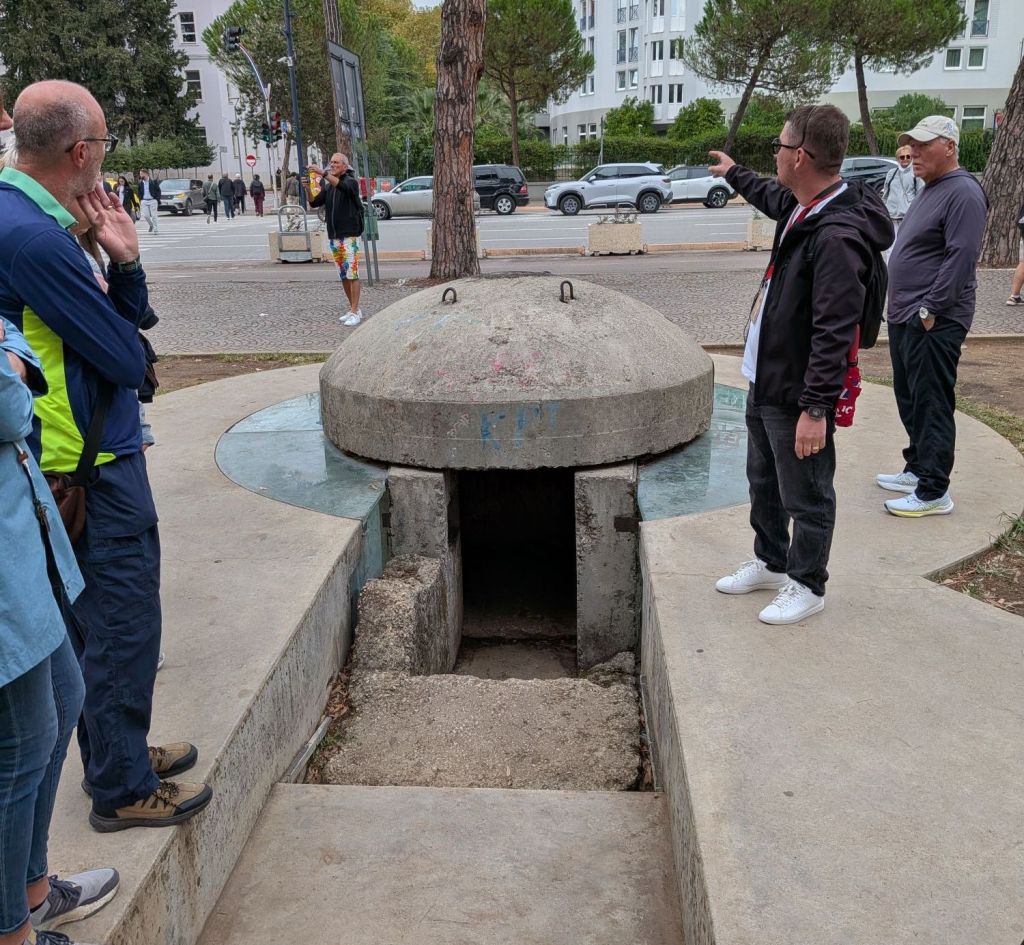
There’s also a large bunker turned museum now called BunkArt 1. A five storey underground compound for government and military officials that was built in case of a nuclear blast. It has 106 rooms complete with communication centers, living quarters, meeting rooms and a theatre.
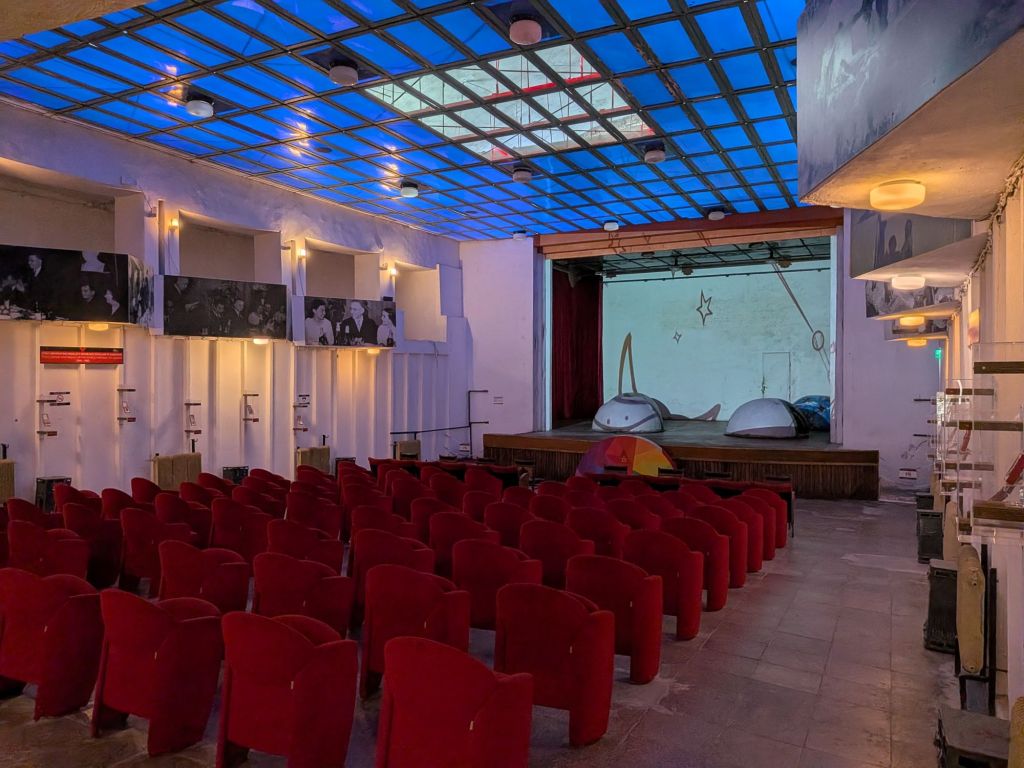
None of the bunkers were used, Albania was never attacked. Hoxha was just paranoid. An interesting and somewhat unsettling display of this paranoia can be seen at the House of Leaves a museum of secret surveillance, housed in the old headquarters of the Sigurimi, Albania’s Communist era secret police.
In the museum were exhibits showcasing the techniques and technology the Sigurimi used to keep tabs on the citizens of Albania. Cameras, microphones, recorders and bugs were all on display, old photos and videos were shown, along with official documents. One of the more chilling rooms had two large walls with almost 15,000 names, written in the smallest of text, of the imprisoned, tortured, and executed.
During Communist rule, religion was banned and all places of worship were destroyed or repurposed. All but one. Just off the main square is the oldest Mosque in Albania. It’s covered with frescoes of waterfalls and trees, something relatively unheard of. Unfortunately I didn’t get a good picture of it.
That evening while we were relaxing in our apartment, we heard a raucous outside, shouting and chanting. We looked out over our balcony to see smoke rising from different points in the city, and groups of youth running from the police. Earlier in the day, our tour guide told us about the ongoing protests in the city. For 137 days the demonstrations were peaceful. This particular night they turned violent.
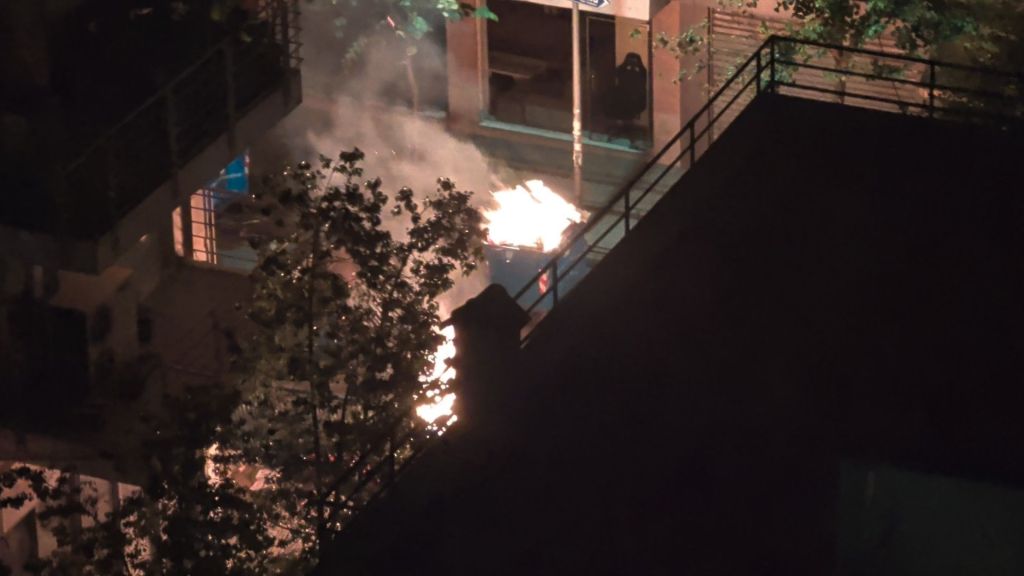
It was the next day that we visited the two museums, BunkArt 1, and the House of Leaves, we passed by the protests that afternoon, Students were facing off against the police, throwing rocks at cops and windows, while being hosed with water cannons, and hit with the odd concussion grenade, and tear gas.
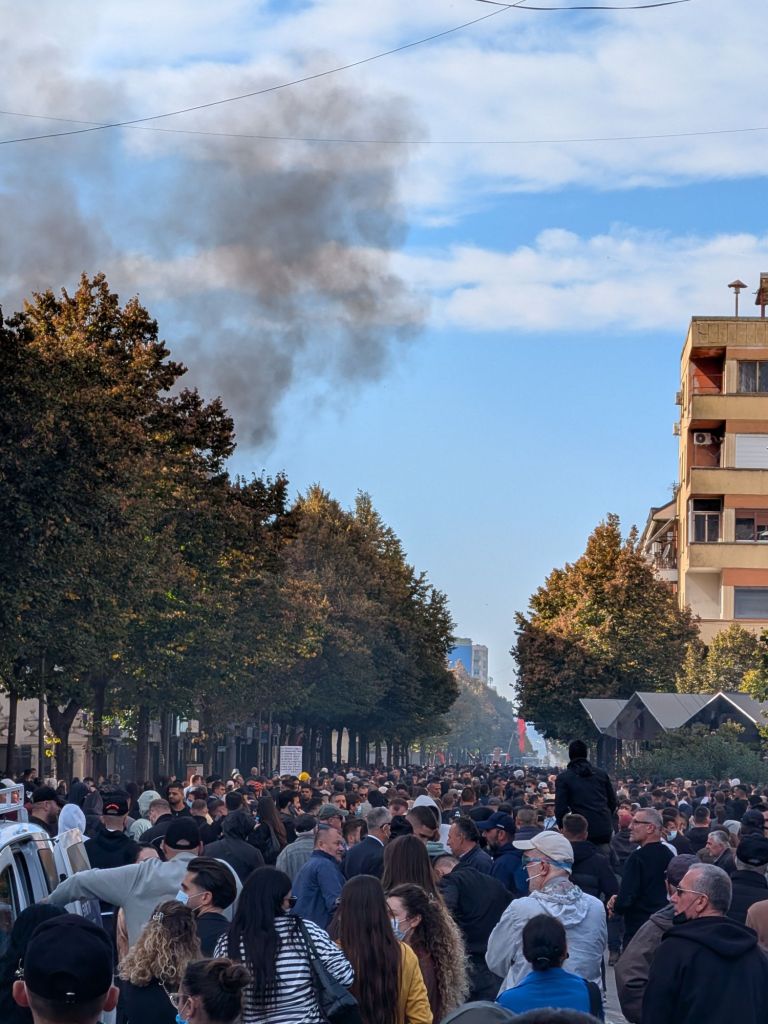
We walked through Skanderbeg square, we passed groups of black clad youth, the sound of the occasional explosion ringing off of the buildings, on our way to have a drink at a nearby cafe. We sat, had a beer, and the billowing smoke began to thicken, passing between buildings, concealing its source. We took this as a good sign to leave, and head back to our apartment. We had an early dinner at the same restaurant we went to the first night, and watched the protest unfold on TV.
Violence aside, Tirana and Albania were great. Both Carmen and I are both keen to return, curious to see what the country will be like in five to ten years.

