The bus to Sarajevo did not leave on time. In fact, we were still waiting for it to show up at the station long after it was supposed to depart. At one point, we were beginning to think we were going to have to make alternative plans. Eventually the bus did show up and we departed almost an hour late.
After about an hour’s drive we made it to the Croatia/Bosnia and Herzegovina border where we had to go through passport control, a process that took about thirty minutes.
The sun slowly set as we traversed the countryside on winding, sometimes bumpy roads. We passed through villages and towns dropping off and picking up new passengers at the few stops we made, and by the time we reached our destination it was late and we were tired. A quick cab ride brought us to our accommodation, and we went directly to bed.
In the morning we went out the front door of our building to the next main Street only to find that we were within a few steps of the main pedestrian area and a 10 min walk from Sarajevo’s famous Bazaar.
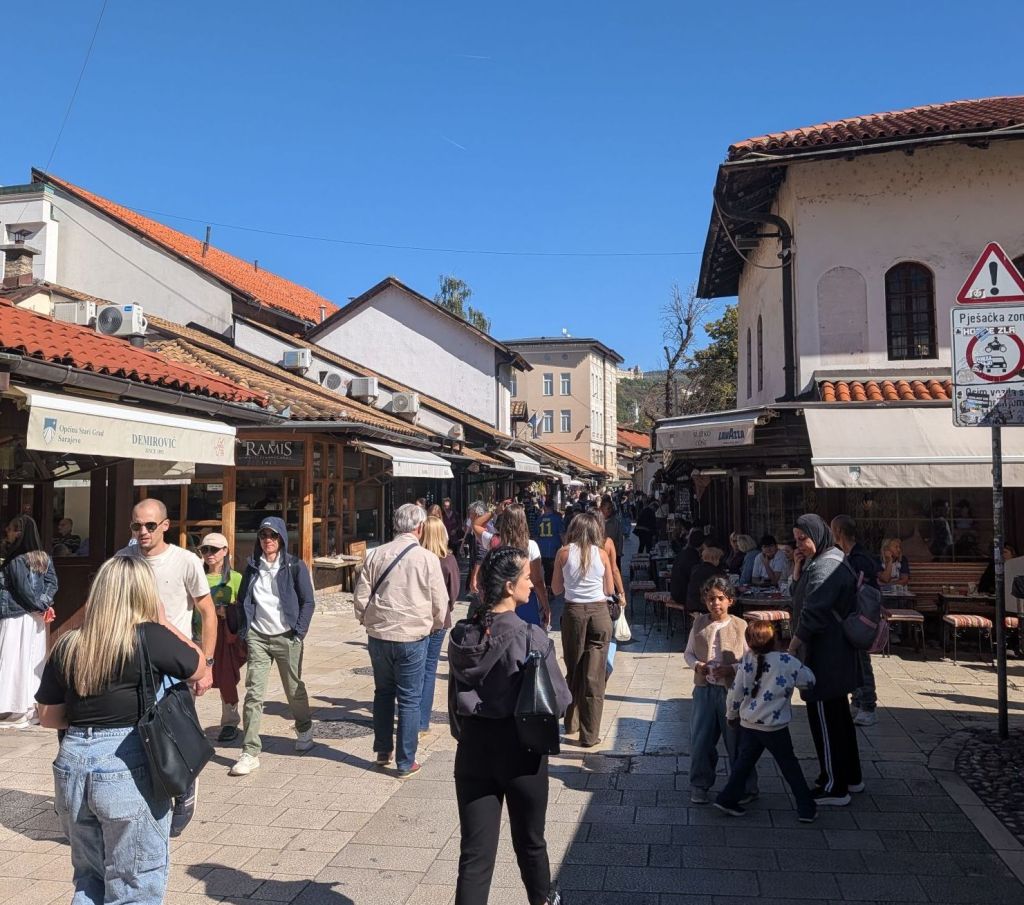
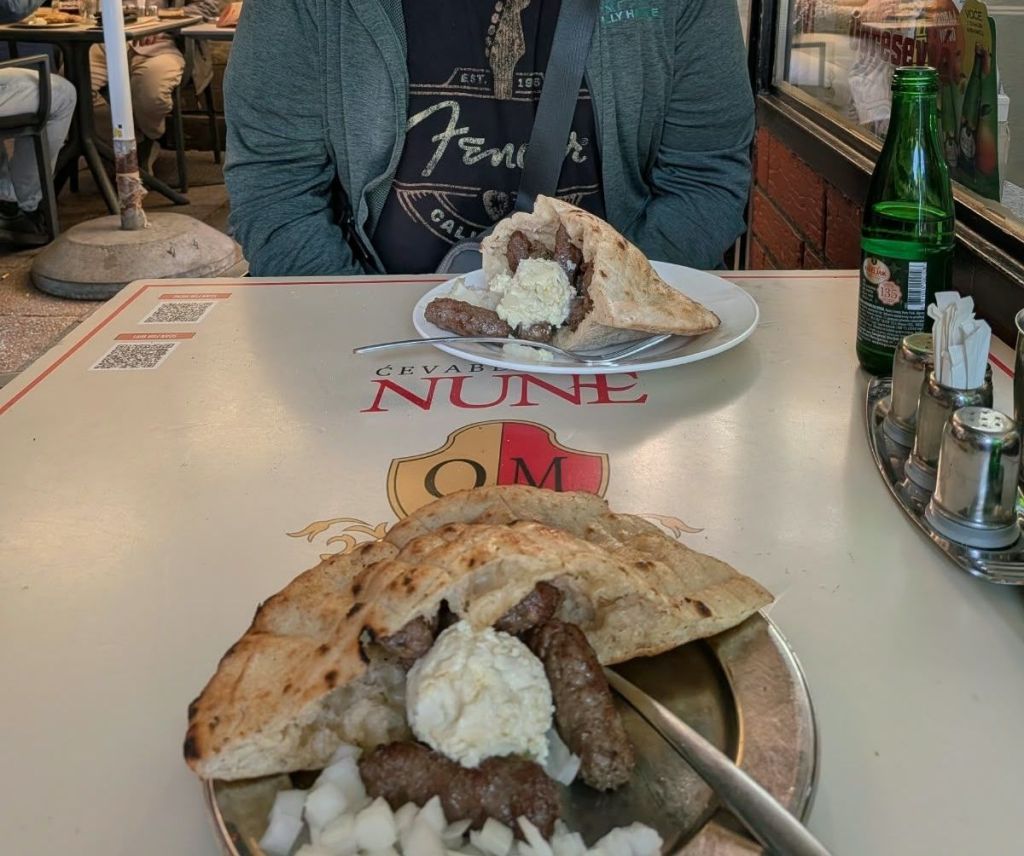
We knew we wanted to try a famous dish from this region called Ćevapi, little beef sausage served in a bread that felt like a cross between focaccia and a pita, raw onion and Kajmak, a sort of Balkan clotted cream. We quickly found a place nearby and after a brief wait, we ate.
We spent most of the day exploring the city, we took a tram to the train station to see about securing train tickets to Mostar, and when we got to the station we sensed something was off. The place was deserted, with the exception of a security guard, and a couple of maintenance workers, and oddly, a semi busy cafe. There was no board announcing arrivals and departures, and no kiosks or ticket agents anywhere. Truthfully the agents were on break, but there was a sign that read “Due to a major fire train service is suspended indefinitely”.
We waited around until the ticket agents came back from their break, and found out that no, trains were not suspended, but yes, there was a major fire at one of the stations along the route we wanted to take, and no trains were not running to Mostar on Thursday, only Friday, Saturday and Sunday. The agent was very apologetic, and said we should check back on Monday to see if anything changes, but I wasn’t going to hold my breath.
The next day we once again took advantage of a free walking tour and our guide took us to many of the interesting places in Sarajevo. We stopped at Kazandžiluk ulica, which translates to Coppersmith street, where we met a fourth generation Coppersmith who gave a short demonstration of his craft.
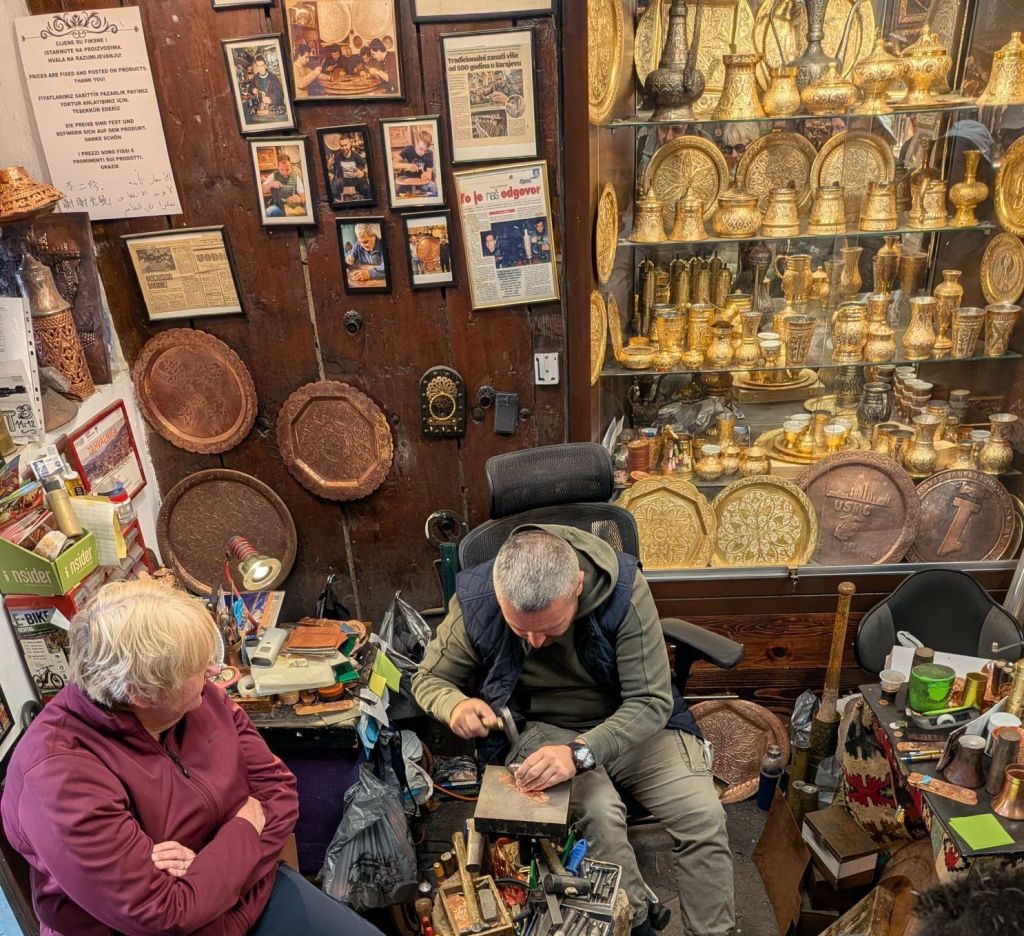
He was very proud of his craft and the fact that his son was following in his footsteps. He also showed us how they take the brass shell casings that litter the hillsides and turned them into ornate vases, shells that pummelled the city for 4 four years. Repurposing something designed to destroy, into something that can hold beauty and life.
We visited other sights, like their city hall building that burned to the ground during the siege, and was rebuilt to the original specifications.
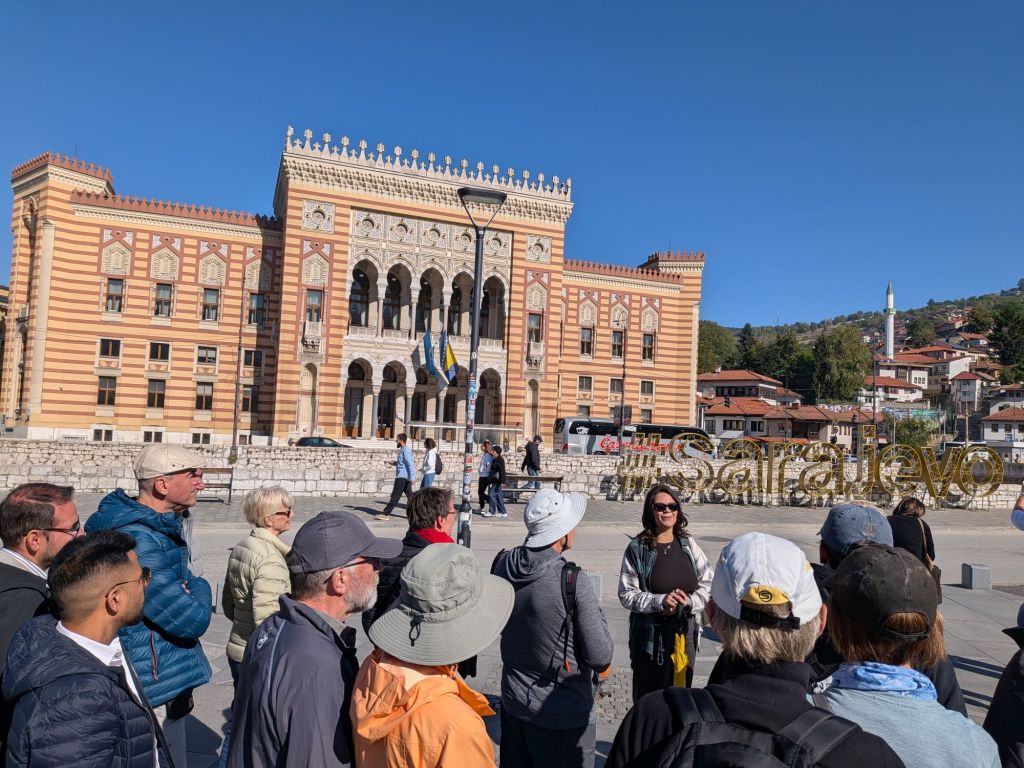
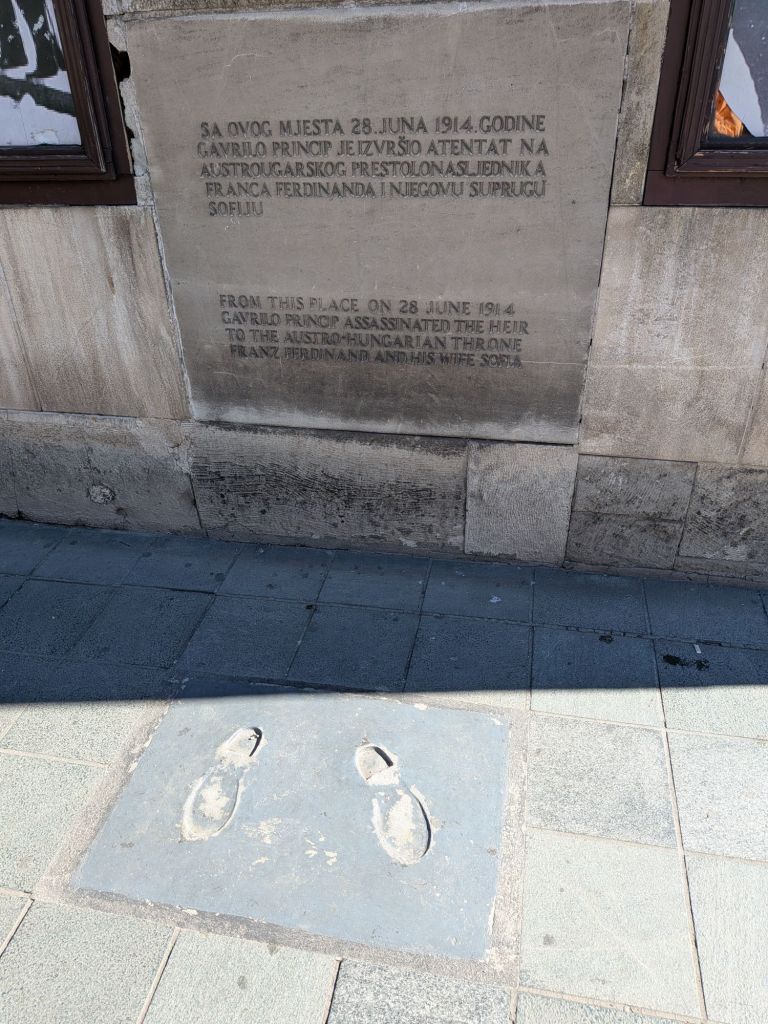
We were taken to the Emperor’s Mosque, Sarajevo’s oldest place of worship built over 100 years from 1457 to 1565. Our guide also wanted to showcase the city’s religious harmony by taking us to an Orthodox church, a Catholic church and two buildings that used to be Synagogues. Along the way we made a stop at a location that could be described as one of the most significant places in modern history. Just on the north side of the Latin Bridge the Archduke Franz Ferdinand and his wife Sophie were assassinated by Gavrilo Princip in 1914 after a series of unfortunate events. A month later World War 1 would begin.
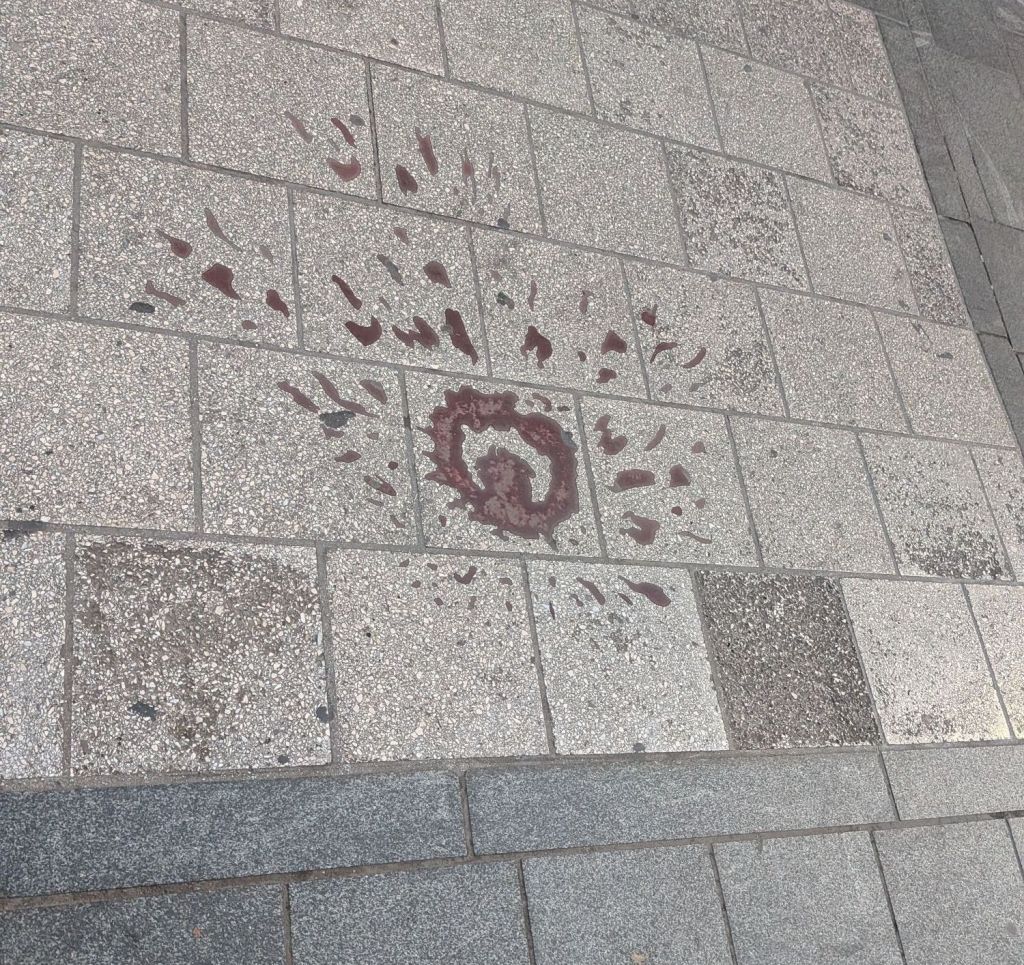
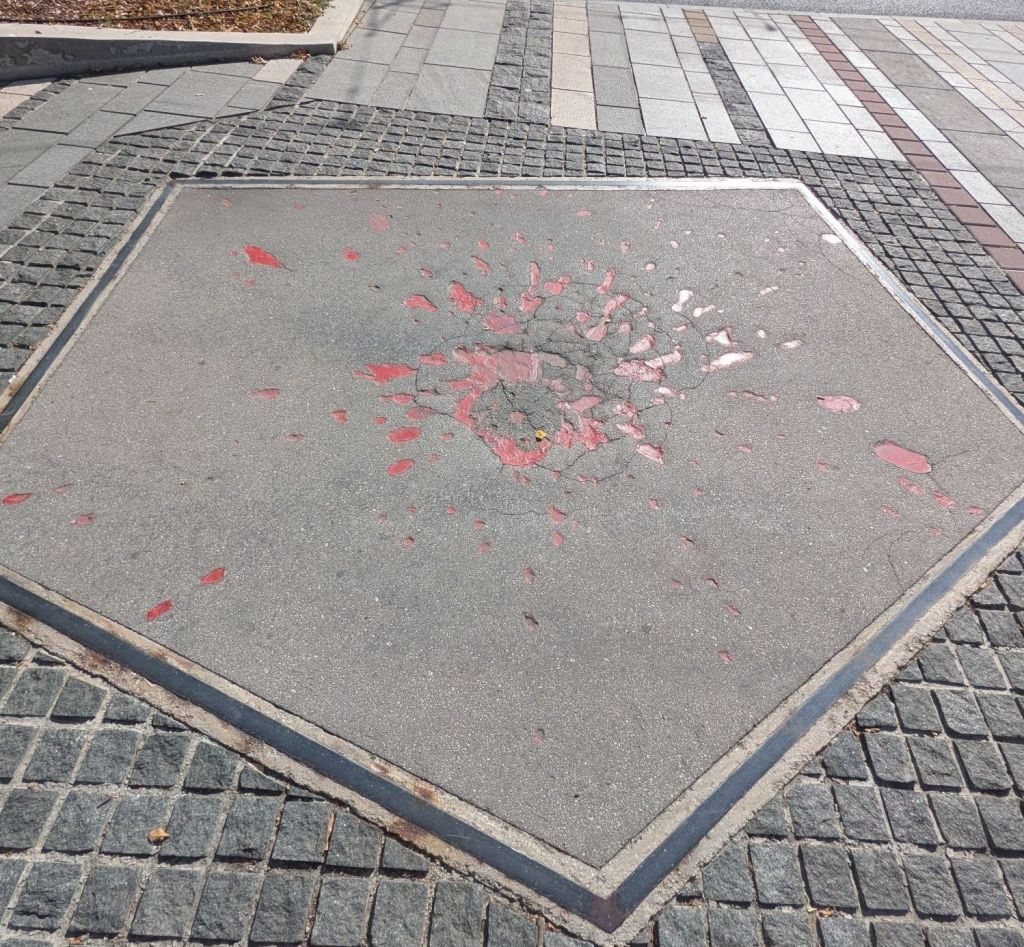
Walking through Sarajevo gave almost constant reminders of what this city and its people went through in the early 90s. Bullet riddled buildings on almost every street, and what are called a Sarajevo Rose, a shell impact that took at least three lives were preserved using a red resin, creating a haunting sidewalk monument.
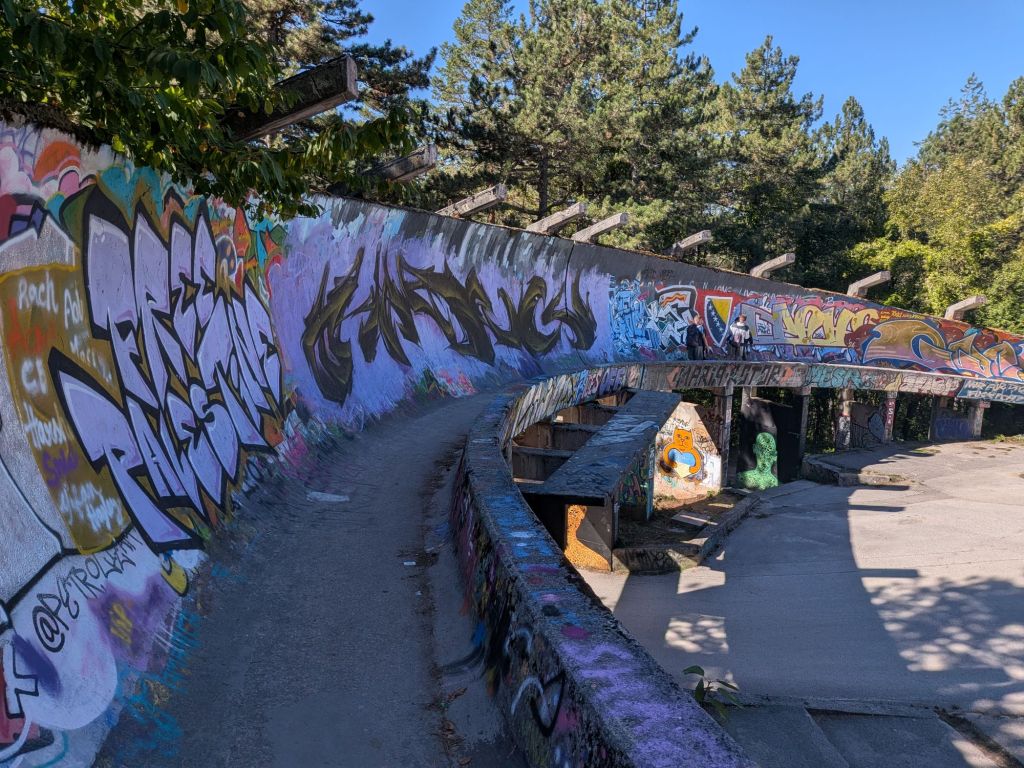
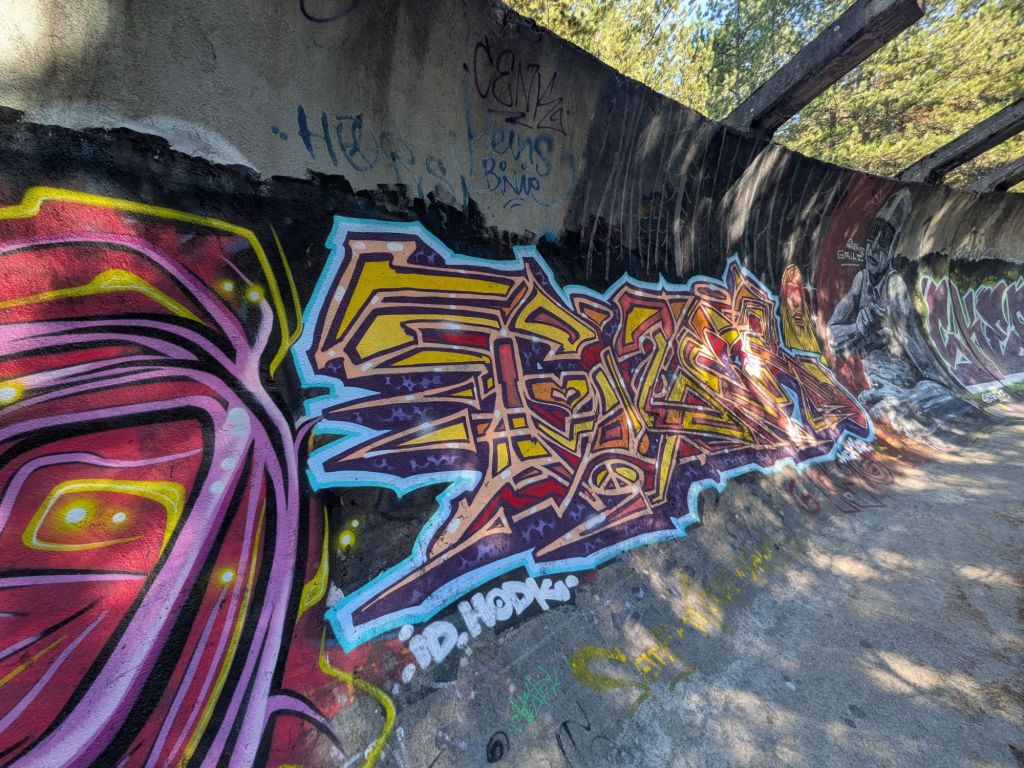
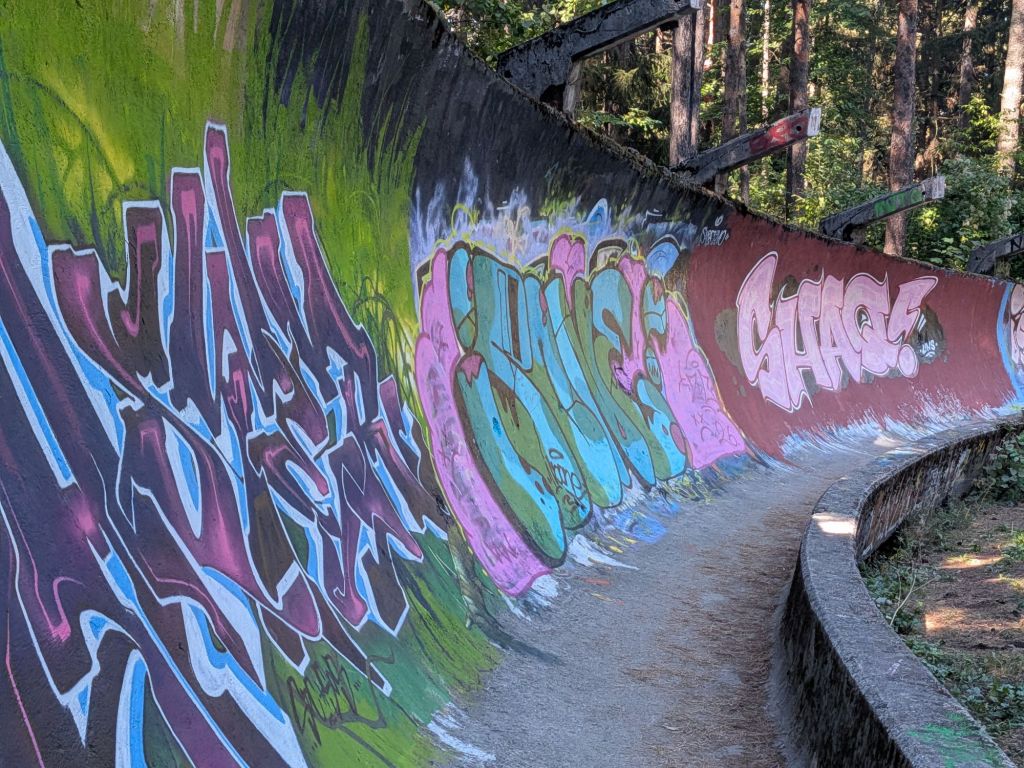
The next day we walked up to the cable car station and went to the top of the nearby ski hill where the old bobsled track from the 1984 Winter Olympics still sits, and as a fun activity, people are allowed to walk along its length. The turns are marked with elaborate graffiti, something I believe is encouraged by local authorities.
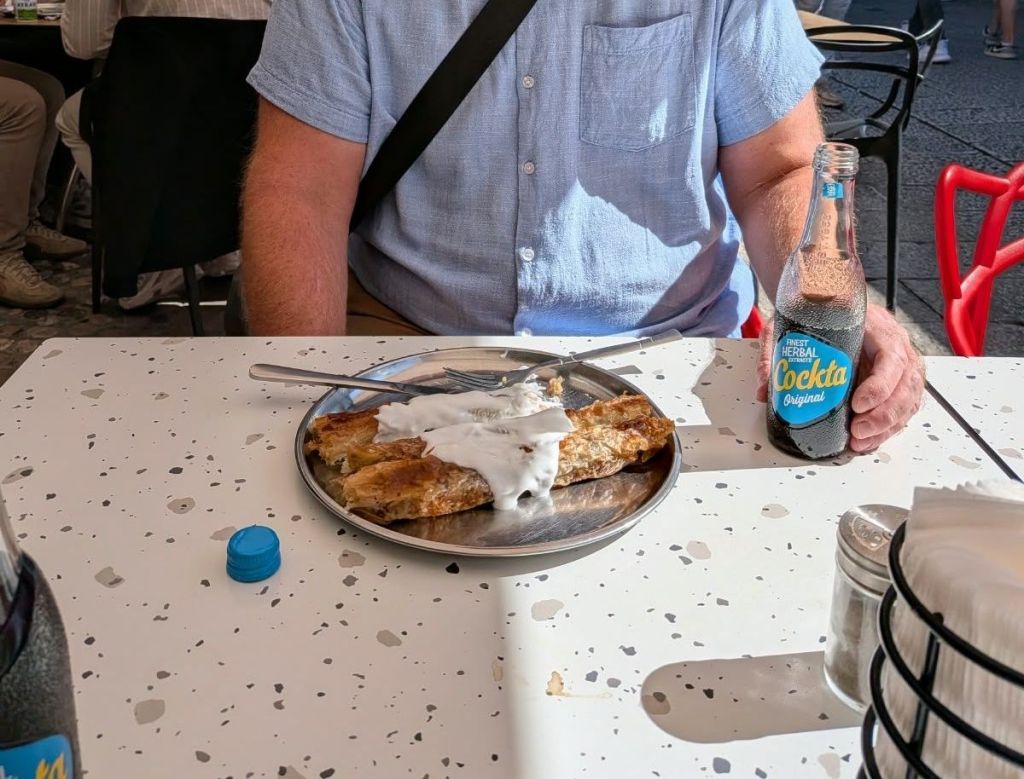
One of the unexpected highlights of our stay in Sarajevo was the food. Everything that we tried was composed of basic ingredients, fresh vegetables, limited spices, and hearty meats. But there was such a variety of dishes. I already mentioned Ćevapi, but other must tries in Sarajevo are Burek, a large rolled pastry stuffed with meat served like pie with a dollop of yogurt sauce.
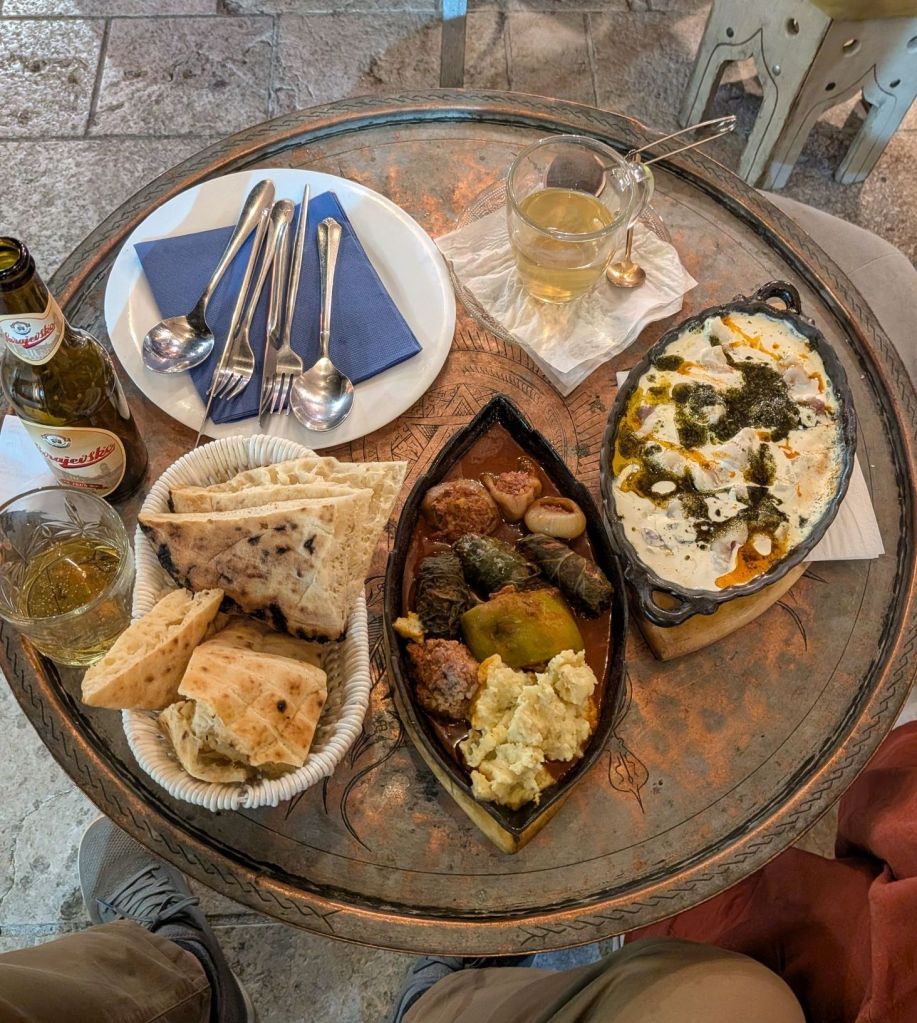
Another local dish that didn’t disappoint was Klepe, a ravioli type dumpling served in a garlic yogurt sauce, one of the best things I had in the city.
The apple pie in Sarajevo was more like an apple baklava. Filo pastry stuffed with apples walnuts and cinnamon drenched in honey.
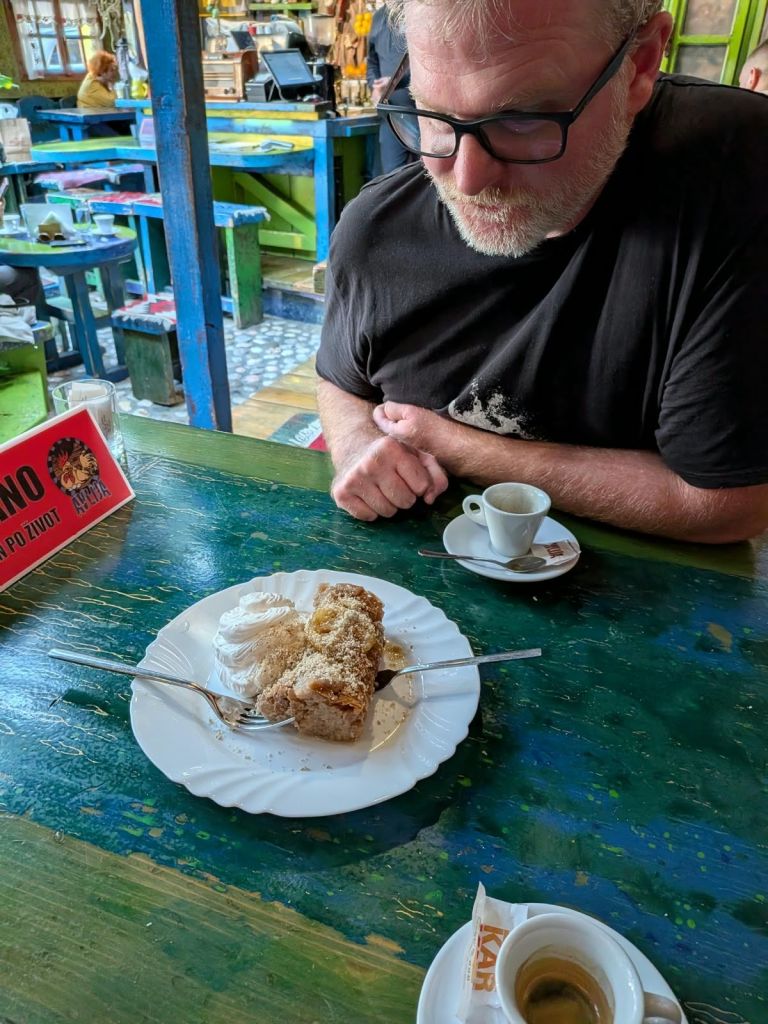
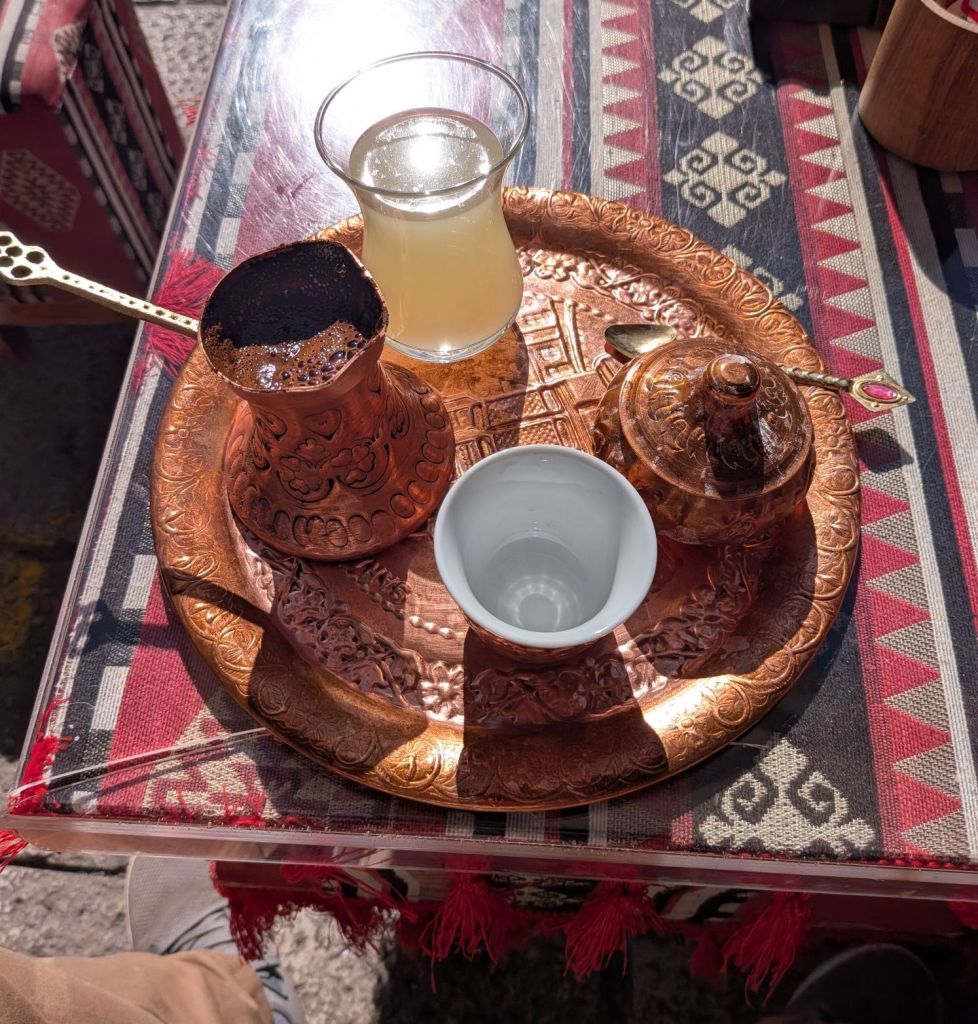
And lastly, something that needs to be experienced is Bosnian coffee. Straight grounds and water heated in a small copper pot called a džezva steeped for a few minutes to let the grounds settle, then poured over a sugar cube. Generally served with a Turkish delight and in the case below, lemonade.
Sarajevo has to be one of the most diverse, interesting, delicious and tragic cities I’ve been to. I already mentioned the bullet ridden buildings, and the Sarajevo Roses, but one thing left to mention are the cemeteries. I first noticed them when we were driving through the villages and towns, on our way to Sarajevo the frequency and size was noticable. Then on our trip up the mountain to the bobsled track I could see at least four massive cemeteries in the city below.
One afternoon, while we were walking up a small, steeply inclined street, we happened across a large cemetery called Kovači Cemetery, most of the headstones were dated between 1992 and 1996, over 1,500 graves in this one alone.
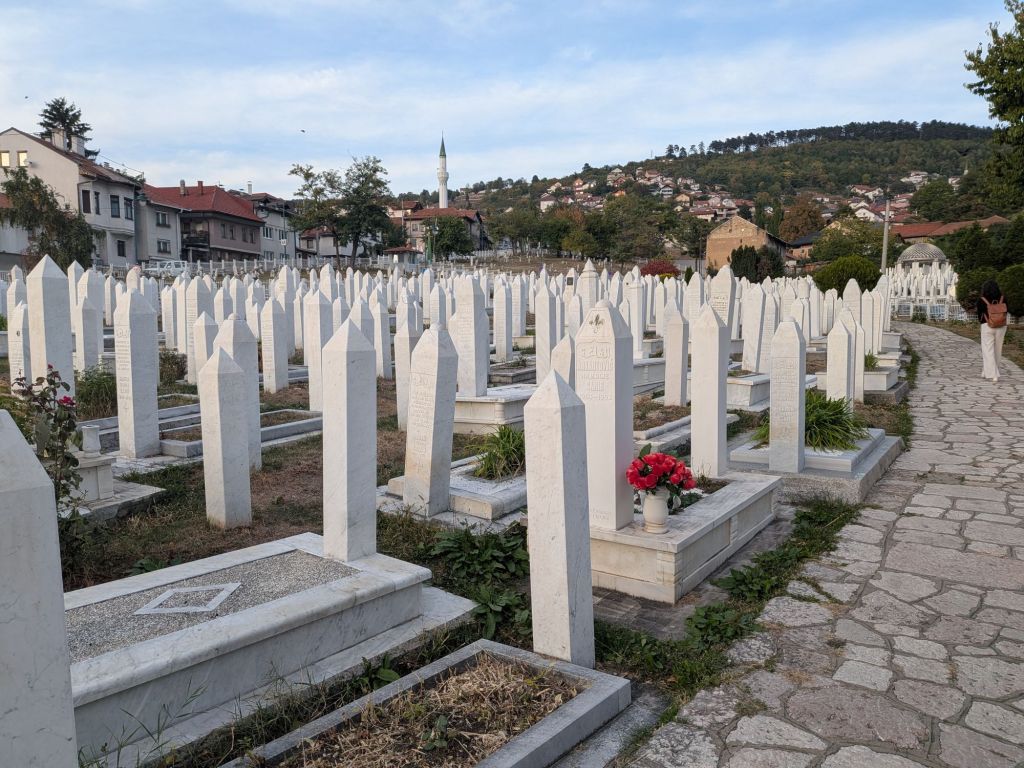
Over 14,000 people lost their lives during a siege that was calculated to take seven days but lasted for four years. Many of the dead were civilians, and of those civilians over 1,500 were children.
But after those horrible years, the citizens just picked themselves up, dusted themselves off and carried on. Yes, there are museums about the horrors of the siege and the conflict as a whole, and the daily reminders like the speckled walls of a shot up building, evidence of what people are capable of, both the evil and the extraordinary.
As our bus pulled out of the station on the day we left, it was the first time I felt a little sadness. I don’t know if I’ll be back, but I definitely recommend a visit, and surely hope to return.


Really enjoy hearing about this leg of your journey but so much sad history, what resilient people! Does it have a laid back feeling like Mexico regarding schedules? The food looks really interesting, lots of meat and yogurt too? Not as much beer, is coffee the alternative? Fantastic weather here this Thanksgiving weekend. Thanks so much for these wonderful enlightening blogs and pictures. Lots of love Mom
LikeLike