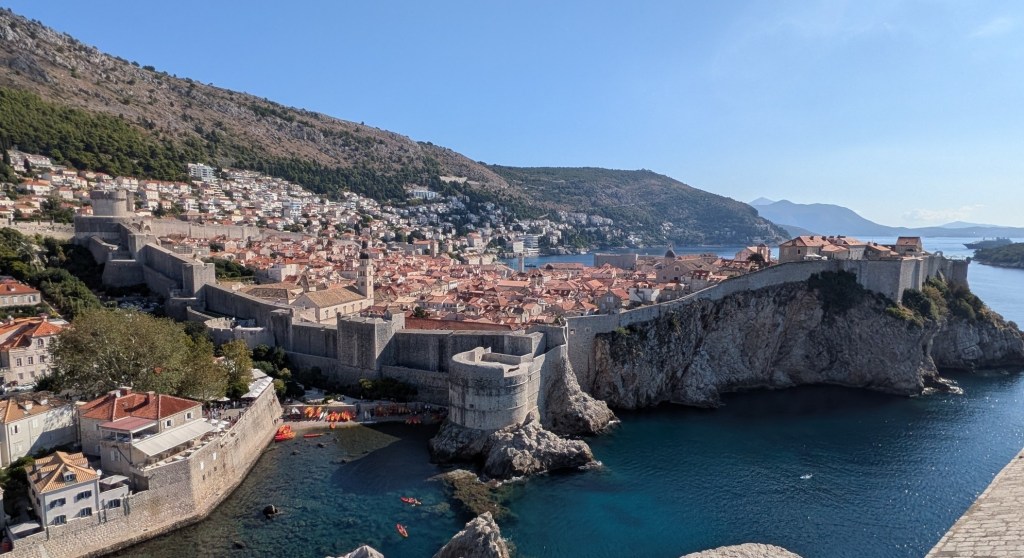
The ferry from Hvar was packed. The ticket stated to get to the port 15 minutes early, and by the time we arrived, there was already a dense line of travelers snaking its way along the waterfront. There was no reason to worry as we made it on the boat, we just couldn’t sit together. The ride was about 3 hours long with a few swells, but overall a smooth sailing.
We got to the old town at around 3:00 and we quickly navigated through the gates and the crowds to the street where our apartment was.
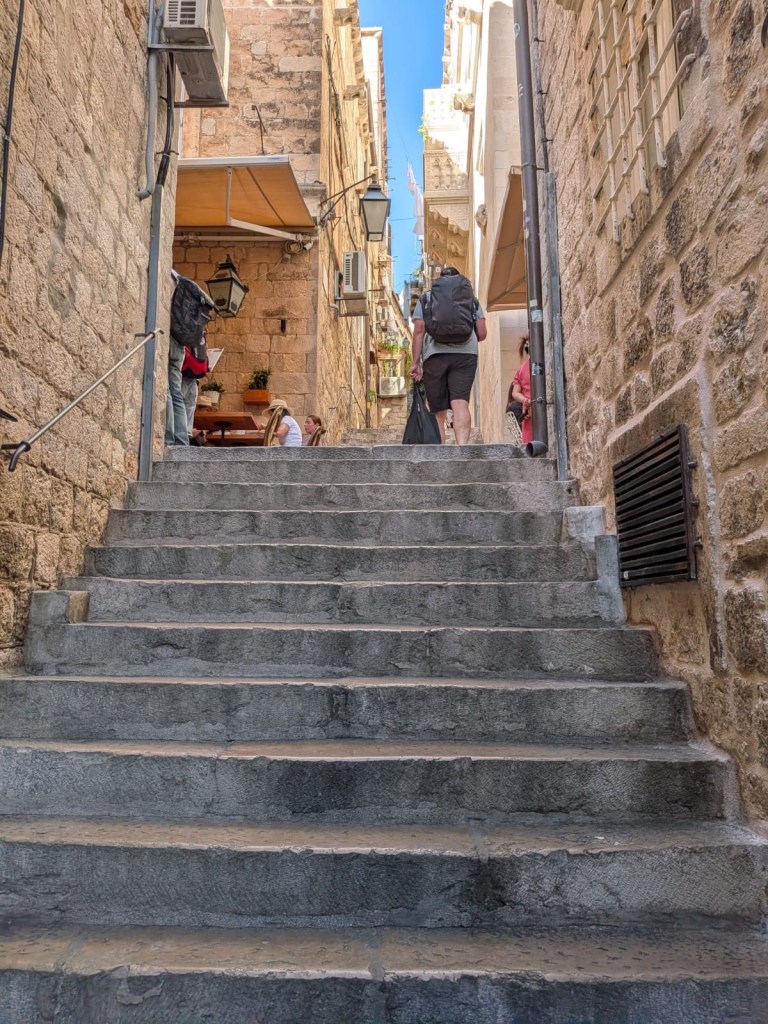
We walked up the steps, all 98 of them, to #18, and walked up another 30 stairs to our room. We were here for a week, the steps were something we’d have to get used to.
We dropped our things and wandered the town, and it didn’t take long before we spotted a couple of people holding what looked like delicious focaccia sandwiches, we turned down the street they came up and found the place where they bought them shortly after.
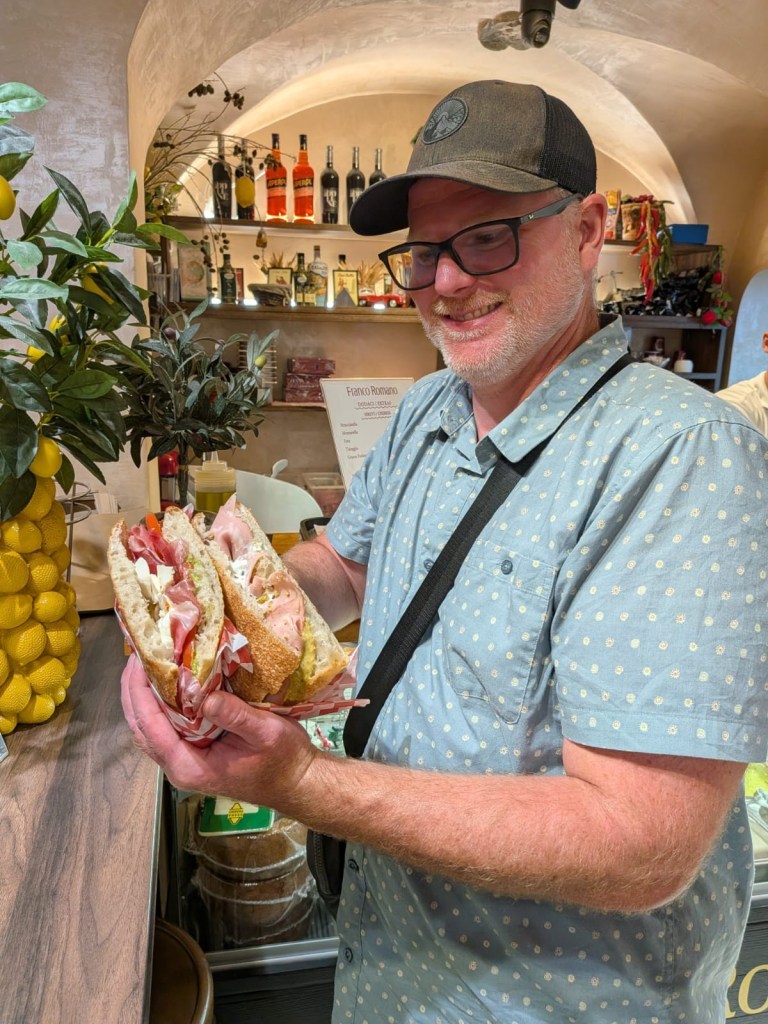
The streets were thick with people, large tour groups clumped together trying in vain to not take up too much space. Bars, restaurants and gelato shops were everywhere, and every single one seemed to have a Dubrovnik markup on their menus. This place was expensive. To battle that, we ate most of our dinners in our small, sloped ceiling attic apartment. Lunch was usually a dense cheese and spinach pastry or sandwich from the bakery chain Mlinar, which we highly recommend for good budget eats, and they’re everywhere in Croatia.
On our second day we did the obligatory free walking tour and learned about the history of the old town of Dubrovnik. Originally two settlements with a small bay in between, over time the two settlements joined, and filled in the bay, built the walls and created what sits there now. According to our guide, the city grew to become a centre of finance, diplomacy and espionage. To this day there is no major industry in Dubrovnik other than tourism.
Of course we can fast forward to the 90s where the old town was subject to a 7 month siege where over 4000 shells and mortars pummeled the city, the evidence of which still lingers on the streets and walls.
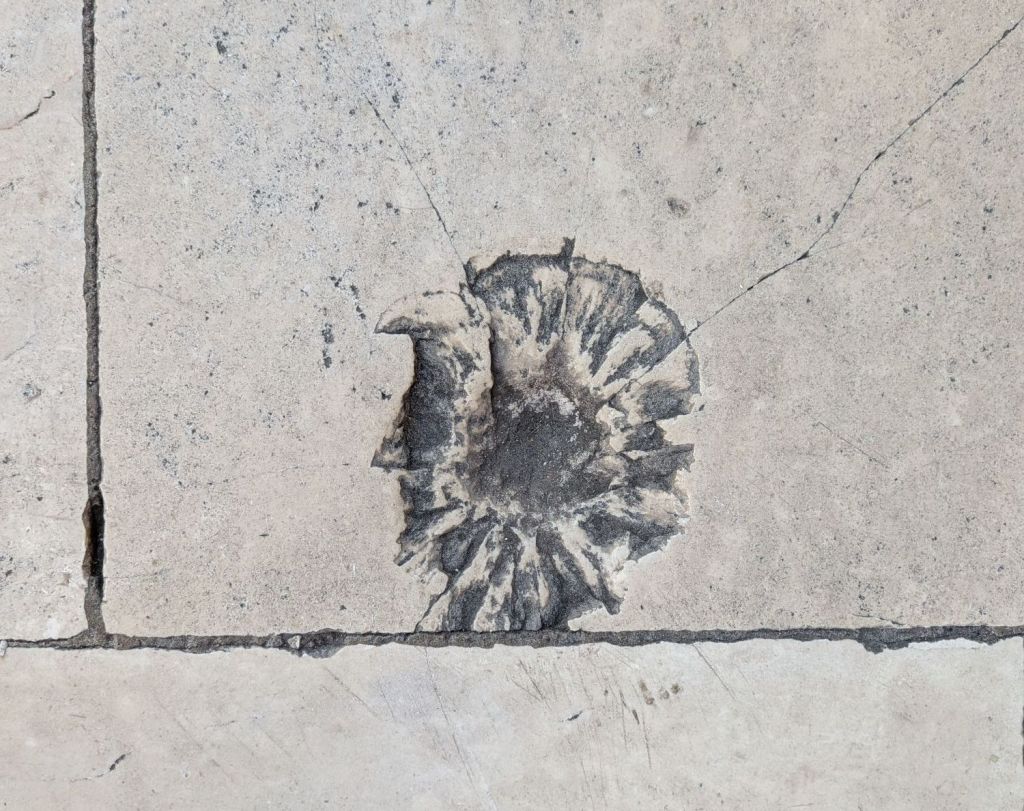
The siege was supposed to last only a couple of days, a calculation that did not account for the defiance and resilience of the people of Dubrovnik. Many of the old buildings suffered fire and structural damage, but they mostly stayed intact. The demographics of the city would be forever changed however, with many refugees never returning. Our tour guide lived in the old town when he was a kid, and was forced to flee to a refugee camp in Italy. Before the aggression, the city held a population of roughly 5000 people, it is now only 700 to 800. That decline isn’t entirely a direct result of the siege, tourism played a part.
After our tour, we went back to our room and lathered up with sunscreen and walked to the nearby Dance beach.
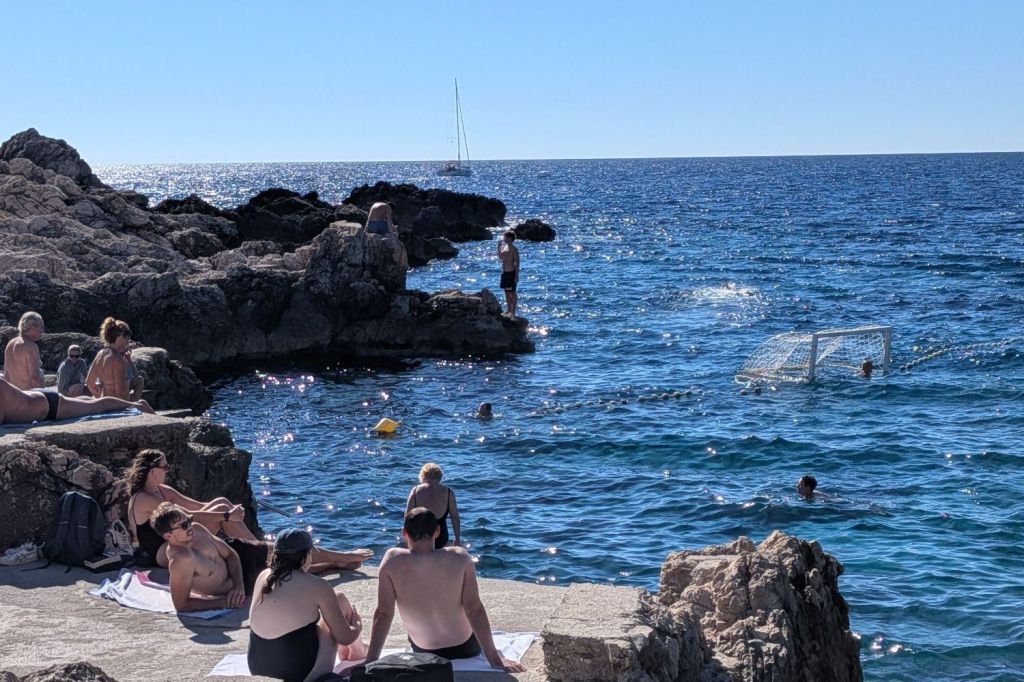
Dance Beach had no sand or pebbles, just rocks and some strategically placed concrete for people to have a flat spot to lie on. It also had a bar that looked like the inside of a boat shed, but they had cold beer, and I’m pretty sure a separate price for locals.
We spent our days between beaches, gelato stops, taking the bus into town and trying our best not to spend too much money. A difficult undertaking where we were.
We did buy the Dubrovnik city pass which gave you access to a number of attractions, and unlimited bus rides on no less than nine different lines. One of the main attractions was walking the city walls, which we did, and enjoyed.
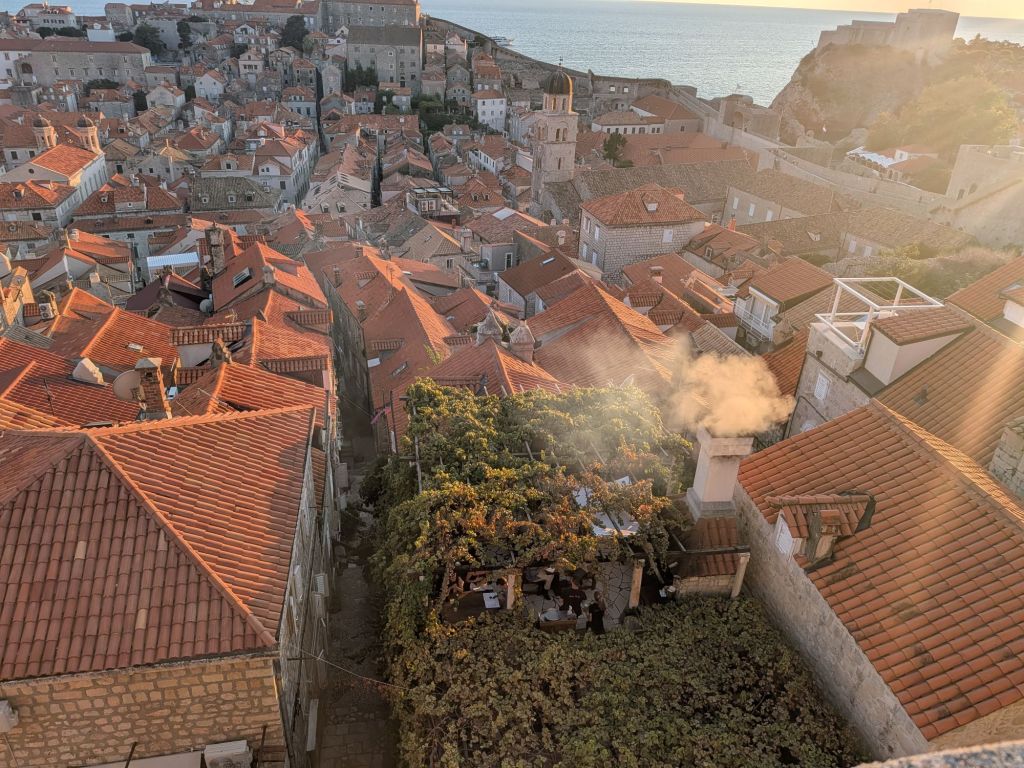
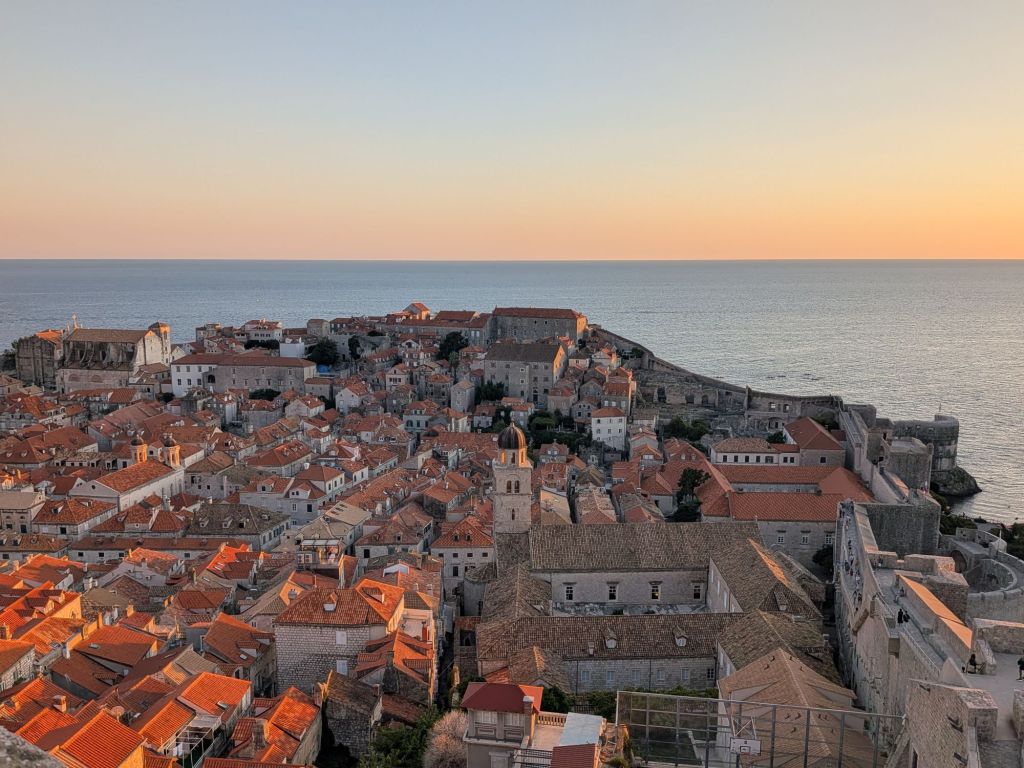
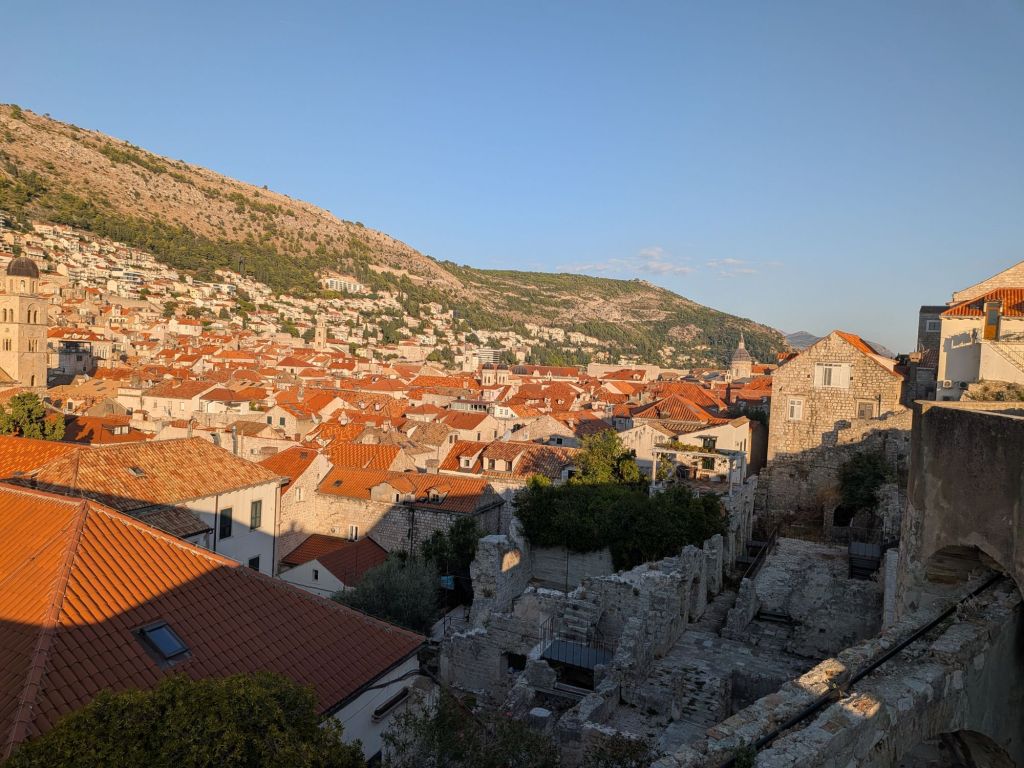
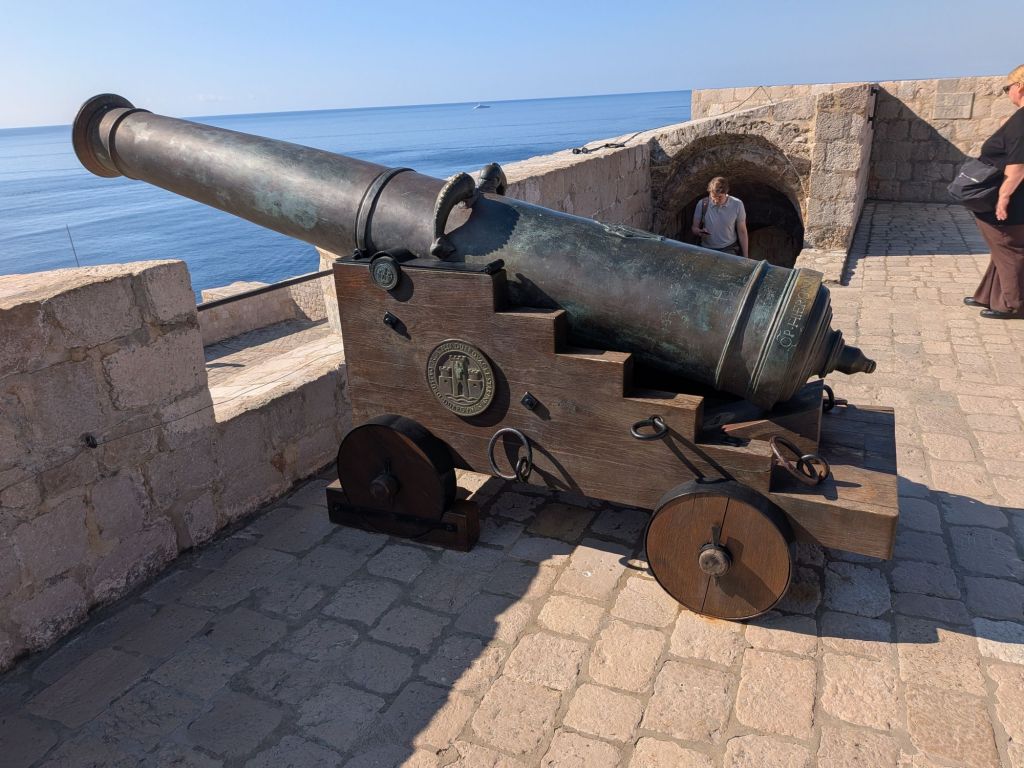
On the day we departed Dubrovnik, we didn’t have to catch a bus until 4:00pm so we basically had the morning and part of the afternoon to occupy, so we went to Lovrjenac Fortress, entrance covered by the Dubrovnik pass, apparently built over the course of 300 years. It has a great view of the old town and like many places in Dubrovnik, was heavily featured in Game of Thrones.
In whole, the old town felt like a massive hotel complex. Every pedestrian a patron or employee. A sort of reanimated corpse, given a second life, but possessed no real soul.
Though we are glad we went, we probably won’t go back.
On to a six hour bus ride, and the city of Sarajevo.


Thanks again so much for the update. Walking the city walls certainly offers some great views. All the pictures and descriptions make it feel like you are right there! Interesting history not so long ago and now I’m intrigued with a city of espionage? Really enjoy learning about these parts of the world. Keep well and safe, Love Mom.
LikeLike